


The Koenigsegg Agera R will making its global debut in the Geneva Motor Show. The Agera R’s body panels are draped over a carbon fiber monocoque whose rigidity is such that a roof is not required. Hence, it’s a removable panel that can be stowed inside the car. The owner of the example being displayed in Geneva is a skier, so the car is outfitted with a custom carbon fiber roof box developed in
READ MORE - 2011 Koenigsegg Agera R
Showing posts with label Supercars. Show all posts
Showing posts with label Supercars. Show all posts
Friday, February 25, 2011

Thursday, February 24, 2011
2011 Geneva Preview: Lexus LFA Nurburgring Package
Lexus just releases new photos and details for the Lexus LFA Nurburgring Package ,which will debut at the Geneva auto show next week.The package celebrates Lexus’ class victories at the 24 Hours of Nürburgring last May. Lexus isn’t actually adding to LFA production; instead, the automaker says that 50 of the 500 cars set to be built will be equipped with the package. Available in Matte Black,
READ MORE - 2011 Geneva Preview: Lexus LFA Nurburgring Package
Monday, February 21, 2011
Lamborghini Unveils The Rolling Chassis Of The LP700-4 Aventador
Lamborghini unveils LP700-4 Aventador V12 rolling chassis, ahead of the Murcielago replacement's debut at the Geneva auto show at the beginning of March, 2011. Unfortunately, the Lamborghini Aventador rolling chassis image was not accompanied by any additional details. However, they did release an image of something that seems to be a material used of the interior of the supercar. In terms of
READ MORE - Lamborghini Unveils The Rolling Chassis Of The LP700-4 Aventador
Friday, February 18, 2011
Novitec Ferrari 458 Italia【Video】
Novitec Rosso announced that it will greet Geneva Auto Show visitors with a Ferrari 458 Italia modification program. The Italian tuner offers a complex development that targets the tech, exterior and interior areas of the supercar.The Novitec Ferrari 458 Italia is powered by the standard 4.5- liter V8 engine that outputs 39 hp / 28.7 kW more than the factory version. To tget the extra 40 hp, the
READ MORE - Novitec Ferrari 458 Italia【Video】
Monday, January 24, 2011
2011 Ferrari Sport Cars Ferrari Enzo Concept By Peter Simon Design
2011 Ferrari Sport Cars Ferrari Enzo Concept By Peter Simon DesignBased on the Credo E-Bone form language, Peter Simon designed an incredible Ferrari concept. This designer takes the Italian dynamic and organic, soft shapes that are closest to nature. Inside and out, this vehicle is meant to radiate energy and power. The inspiration is no less than animal and human bones, creating a dynamic
READ MORE - 2011 Ferrari Sport Cars Ferrari Enzo Concept By Peter Simon Design
Saturday, January 8, 2011
2011 Dagger GT Super Sport Cars TranStar Racing
2011 Dagger GT Super Sport Cars TranStar RacingThe Super Sport Cars "Extreme" is back! The American creation. The 2000 hp, 300 mph Dagger GT's design objectives are to be the best-looking, fastest Supercar in the world. This Super Sport Cars is being specially designed, very deliberately and explicitly, to break all world records and to bring back the most popular class of race car: the
READ MORE - 2011 Dagger GT Super Sport Cars TranStar Racing
Thursday, January 6, 2011
2010 Ford GT90 Super Sport Car Concept going to auction
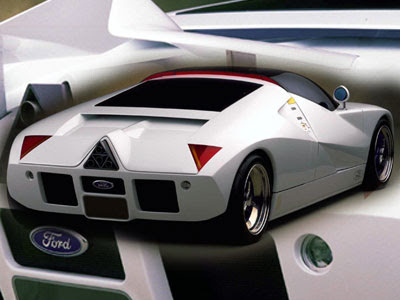
 2010 Ford GT90 Super Sport Car Concept
If Ford first introduced the GT90 Concept at the 2010 Detroit Auto Show next month, it would still be one of the most eyecatching cars on the show floor. What's amazing is that Ford unveiled the GT40 successor nearly 15 years ago. What's more, even by today's standards it's still a supercar among supercars.
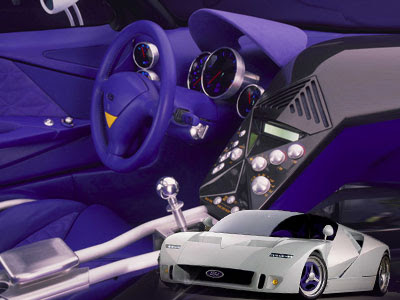
The quad-turbocharged 6.0-litre V12 puts out an estimated 720 horsepower, the body is constructed completely of carbon fiber and top speed is somewhere in the 400 kph range. The only hints that it's not a modern supercar are the all-blue interior and wheels that look dated now.
So what's all the fuss about the GT90 Concept now? RM Auctions in the States has just announced that it will be offering the concept car at its upcoming Arizona sale. That's right, this is your chance to own one of the coolest concept vehicles of all time. This is the first time that the GT90 Concept has ever been publicly for sale at auction, and RM claims that it is in "excellent running condition, having been properly stored and maintained over the year." No estimated on price is given, but we're guessing it will take a large suitcase of cash to take the car home.
 2010 Ford GT90 Super Sport Car Concept
The one-off GT90 Concept Car, labeled immediately as "the world's mightiest supercar" by Ford Motor Company on December 6, 1994, was the spiritual successor to the Ford GT40, the product of a colossal feud in the early 1960s between the Blue Oval from Dearborn and the Prancing Horse of Northern Italy. The GT90 draws from the design cues of its heritage and pays homage to the famed Le Mans-winning Ford GT40s of the 1960s, which were created after the failed attempt by Ford to buy out Ferrari.
At a development cost in the neighborhood of $3 million, the GT90 was certainly worthy of pulling styling cues from the original Ford GTs, and although it was never meant for production, it was built according to a Ford press release as a "test bed for technology, engineering and design concepts, and driver-oriented features that eventually may be used in Ford production vehicles."
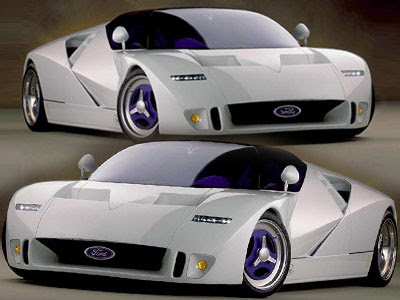
Officially unveiled to the public in January 1995 at the Detroit Auto Show, the GT90 is finished in bright white with a bright blue and carbon fiber interior. It features a mid engine quad-turbocharged V12 that produces an estimated 720 horsepower and 660 pound-feet of torque. As a result, it had a claimed top speed of 253 mph, which even by today's standards would make it one of the fastest production cars in the world – faster even than a McLaren F1, which was widely considered the world's preeminent supercar at the time.
 2010 Ford GT90 Super Sport Car Concept
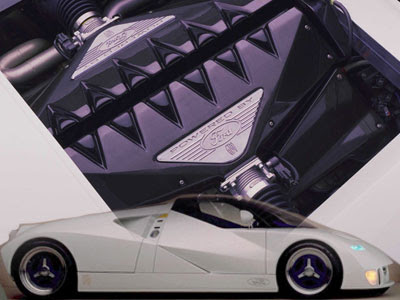
The engine, which was a 48-valve six-liter V12, had to be combined together with four Garrett Systems T2 turbochargers in order to reach its estimated 720 horsepower and was based on the Ford Modular engine. Created by using parts of two Lincoln V8 engines, engineers removed the last pair of cylinders from the rear of one engine and the first pair of cylinders from the front of the other engine. The cut-down engines were then welded together with the final result being a 90-degree V12, which utilized a 90.2 mm bore and a 77.3 mm stroke to achieve maximum power.
The GT90 features the FFD-Ricardo five-speed manual gearbox found on the XJ220 and, considering the torque load that it is designed to handle, is noted as having a relatively light shift quality. Also borrowed from the XJ220 comes the all around double wishbone suspension that was designed to enable the car to handle well at top speeds.
 2010 Ford GT90 Super Sport Car Concept
Using Ford's new "Edge" design philosophy, the car incorporated advanced technology with a mixture of flat planes, angles, glass and triangular shapes that seemingly all collided together. The GT90 was the first car created using this new styling directive from Ford, which went on to be responsible for the creation of other Ford products like the Ka and Cougar. The effect is most impressive and a wonderfully executed stylistic throwback to its GT40 predecessor, which at once stays true to its heritage but acknowledges the advances in modern design. Taken directly from race car technology, the GT90 body panels are molded out of carbon fiber while the chassis is formed out of a honey-comb sectioned aluminum monocoque.
The GT90 is a test bed of advanced technology and design. It sports a tinted, laminated glass bubble over the cockpit and a spoiler that rises off the rear deck at high speeds. According to Ford, it has a "design that tightly enclosed its mechanicals with no wasted space; high tech lighting and blind-spot detection systems; and tiles like those on the space shuttle to shield the V12's exhaust outlets."
 2010 Ford GT90 Super Sport Car Concept
After its unveiling in Detroit, the GT90 made its rounds on the Auto Show Circuit in 1995, traveling around the world to Frankfurt and as far away as Tokyo. With few other showings in between, the car recently was shipped over to Europe to be on display in the Ford of Europe 2008 exhibit at the Goodwood Festival of Speed. After returning home, the car was shipped to Alabama where it was on display as part of the Mustang 45th Anniversary Celebration.
This superb concept car remains in excellent running condition, having been properly stored and maintained over the years in between its show appearances. RM Auctions is proud to publicly offer the GT90 for the first time ever at auction. A remarkable one-off piece of automotive history and cutting-edge design, its offering may very well be a once in a lifetime opportunity for Ford devotees and concept car enthusiasts.
Sunday, January 2, 2011
Wings of Nike Sport Cars Concept

Wings of Nike Sport Cars Concept
"Nike of Samothrace - ancient Greek statue - represents Goddess of victory and sea battle. Conveys a sense of action and triumph as well as portraying artful flowing drapery through its features which the Greeks considered ideal beauty", is the inspiration of the name.
Wings of Nike Sport Cars Concept
Idea to this Concept car was to reborn the spirit of victory and passion in different way to honor legends which shouldn't be forgotten. Reviving the spirit of victory and passion to honor the classic Formula 1 cars, designer Darko Nikolic has created a supercar concept dubbed the “Wings of Nike” (WON), representing triumph and ideal beauty in Greek mythology, which brings blood quickening and sophisticated of 50s look with seriousness of limousines from 30's was a huge challenge.
Wings of Nike Sport Cars Concept based off a smorgasbord of 1930s and 1950s era cues, including wings, extended fenders, chrome bumper, suicide doors, and a roadster style rear end. The chassis is formed from lightweight aluminum, and its outer shell from carbon fiber. Capturing the sport heart in the sleek, stylish body of limousine, the futuristic sport sedan flow the lines to connect parts, spreading almost individually, along the whole body for superior aerodynamics.

Wings of Nike Sport Cars Concept
The power engine of the Wings of Nike Sport Cars Concept is a 7.3-liter V-12, generating a comfortable yet potent 750 bhp, delivered by four (all wheel drive) 22-inch dubs, and egged on by a 7-speed dual plate clutch transmission. The brakes are ceramic for superior stopping power, and the black and red exterior finish to symbolize its sporty character, which further is enhanced by a chromed bumper, white circles on tires and doors opening backwards.
Wings of Nike Sport Cars Concept
Technical specifications:Class: grand tourer, supercar
Type: 4-door sedan
Body made of: carbon fibre with aluminum sub-frames/ aluminium
Engine: 7.3l V-12 (750 bhp)
Transmission: rear-mid based 7 speed dual clutch/twin plate clutch
Layout: front-engined, all-wheel drive
Breaks: ceramic breaks by Brembo
Design: Darko Nikolić
Rhinoceros 3D modeling: Darko Nikolić
V Ray renderings: Miloš Ličina
Photography director: Darko Nikolić
Post production: Darko Nikolić

Wings of Nike Sport Cars Concept
Sunday, October 3, 2010
2011 RSC Raptor GT

Manufactured in Germany, RSC’s newest supercar sports a front-mid-engine design and is rear-wheel drive. The RSC Raptor GT is powered by a 2.6-liter rotary engine that's available in four versions, with power outputs ranging from 500 hp, to 1,200 hp. The RSC Raptor GT S is the base model, equipped with Dry Sump, it develops 500 hp. The RSC Raptor GT RS has a water-to-air turbocharger system and develops 800 hp and the RSR has a twin-turbo and outputs a massive 1,200 hp.
The Raptor GT will be sold with different spec-variants called the GT S, RS, RSR and N-spec. Depending on which model, engine configurations vary and include a water-to-air inter-cooled turbo or a bi-turbo system. The engine is coupled to an 8-speed RSC R-Shift transmission with a hydraulic shift mechanism which makes gear changes in 25 to 35 milliseconds.
Inside, the RSC Raptor GT is also said to feature a pair of seven-inch digital displays coupled with a five-inch tachometer, gear indicator and shift lights, the entire package supposedly weighing in at a claimed 2,425 pounds. RSC also plans an all-wheel drive, mid-engine project with similar specs, which seems like a lot to bite off while they still appear to be chewing on this one.
Depending on the model, the body is of 80% glass fiber or carbon fiber and differs in details in the form and aerodynamics. The interior will get two 7" full-graphic-Diyplays, high-quality materials like carbon fiber, brushed aluminum and various types of leather.


Press Release
Rotary Super Cars Germany is a young company with the goal of offering symbiosis of high performance vehicles and active environment to create new benchmarks in the areas, power efficiency, value for money or the use of high-tech materials.
Since there is no vehicle that meets all these requirements, the construction of the RSC Raptor GT™ started in 2009. Systems such as the VAS (variable aerodynamic system) were developed and brought to small series production. This vehicle meets all requirements or exceed them. With enthusiasm and passion of our team involved in the development and production of the Raptor GT™. We guarantee the best workmanship and highest individuality. The selective use of proven components increases the active/passive safety while reducing production costs, which ultimately benefits every buyer.
With the Raptor GT™, we give our customers the opportunity to experience the unique combination of high end components and environmental protection on the roads and racetracks of the world. The Raptor GT™ doesn't follow the standard in many areas, he goes a very unique way with his drive and approach design. Each vehicle is handmade and unique, which corresponds exactly to the needs and wishes of the owner.
Drivetrain:
The RSC Raptor ™ GT S, RS, RSR and N-Spec does not have a conventional drive system as used in most of today's super sports cars. He has a self-developed and heavily modified, based on parts of the Mazda 13B MSP, high-performance engine with four rotors (4-Rotor rotary engine) and, depending on the model, a water-to-air intercooled turbo or biturbo system. This engine is the heart of the RSC Raptor GT™ and gives him his very special temperament. The power output of a rotary engine uniformly grows with increasing rpm. The high-performance engine in the RSC Raptor GT™ has the redline set depending on the selected driving mode, up to 7,500 rpm or 9000 rpm. The fuel E85 is used, which is produced from rapeseed. By using this fuel to reduce the emissions by about 90% is feasible.
The sequential 8-speed RSC R-SHIFT transmission in the RSC Raptor GT™ is controlled by a hydraulic shift system with shift times of 25-35 milliseconds. Furthermore, each RSC Raptor GT™ has a carbon-aluminum drive shaft, and an electronically controlled rear axle differential.
The powertrain is controlled by an engine management system, specifically developed from Bosch Engineering GmbH for the RSC Raptor GT™, including a complete electronic system consisting of ESP, ABS, EBD, VAS, R-TRAC (traction control), R-DIFF (electronic differential) and a Launch Control. The RSC Raptor GT™ RSR and N-Spec also has an active suspension. All electronic systems can be easily operated via the buttons on the steering wheel.
Body/Chassis:
Depending on the model the body of the RSC Raptor GT™ is of 80% glass fiber or carbon fiber and differs in details in the form and aerodynamics. Furthermore a wide range of special equipment is available. Starting with the rims, complete body equipment packages up to the painting - the customer has no limits.
The RSC Raptor GT™ also has the RSC VAS™ (Variable Aerodynamic System), a system that changes the aerodynamics and the aerodynamic properties of the RSC Raptor GT™ to generate more downforce at high speeds. This system include SBS (Speed Brake System).
Interior:
The RSC Raptor GT™ has two 7" full-graphic-Diyplays, where various telemetry data such as speed, mileage, temperatures, pressures, and the chosen vehicle settings and many other data, are available. These displays create exciting visual effects that show the high-tech genes of the RSC Raptor GT™. They are placed on the left and right of the large 5" tachometer with digital gear indicator and shift light. The driver is always looking at the relevant information and driving a RSC Raptor GT™ becomes a special experience.
The cockpit offers an unique combination of high-quality materials like carbon fiber, brushed aluminum and various types of leather. Many interior equipment packages are available. There also no limits for the customer.
Production levels of the RSC Raptor GT range from the base 500 hp 2.6L 4 rotor rotary to 800 hp turbo and 1.200 hp twin turbo variants. The cars are built in Germany. They are available in left- and right-hand drive configuration.
VelociRaptor:
The second car which is currently in the construction phase. The main facts: Mid-engine, AWD, 8-speed sequential RSC R-SHIFT transmission, RSC VAS, 90% carbon fiber, over 1.200 hp and a weight under 1.100 kg.
This car will set new benchmarks...
Rotary Super Cars Germany
(+49)1511 75 500 98
2011 RSC Raptor GT
Manufactured in Germany, RSC’s newest supercar sports a front-mid-engine design and is rear-wheel drive. The RSC Raptor GT is powered by a 2.6-liter rotary engine that's available in four versions, with power outputs ranging from 500 hp, to 1,200 hp. The RSC Raptor GT S is the base model, equipped with Dry Sump, it develops 500 hp. The RSC Raptor GT RS has a water-to-air turbocharger system and develops 800 hp and the RSR has a twin-turbo and outputs a massive 1,200 hp.
The Raptor GT will be sold with different spec-variants called the GT S, RS, RSR and N-spec. Depending on which model, engine configurations vary and include a water-to-air inter-cooled turbo or a bi-turbo system. The engine is coupled to an 8-speed RSC R-Shift transmission with a hydraulic shift mechanism which makes gear changes in 25 to 35 milliseconds.
Inside, the RSC Raptor GT is also said to feature a pair of seven-inch digital displays coupled with a five-inch tachometer, gear indicator and shift lights, the entire package supposedly weighing in at a claimed 2,425 pounds. RSC also plans an all-wheel drive, mid-engine project with similar specs, which seems like a lot to bite off while they still appear to be chewing on this one.
Depending on the model, the body is of 80% glass fiber or carbon fiber and differs in details in the form and aerodynamics. The interior will get two 7" full-graphic-Diyplays, high-quality materials like carbon fiber, brushed aluminum and various types of leather.
Press Release
Rotary Super Cars Germany is a young company with the goal of offering symbiosis of high performance vehicles and active environment to create new benchmarks in the areas, power efficiency, value for money or the use of high-tech materials.
Since there is no vehicle that meets all these requirements, the construction of the RSC Raptor GT™ started in 2009. Systems such as the VAS (variable aerodynamic system) were developed and brought to small series production. This vehicle meets all requirements or exceed them. With enthusiasm and passion of our team involved in the development and production of the Raptor GT™. We guarantee the best workmanship and highest individuality. The selective use of proven components increases the active/passive safety while reducing production costs, which ultimately benefits every buyer.
With the Raptor GT™, we give our customers the opportunity to experience the unique combination of high end components and environmental protection on the roads and racetracks of the world. The Raptor GT™ doesn't follow the standard in many areas, he goes a very unique way with his drive and approach design. Each vehicle is handmade and unique, which corresponds exactly to the needs and wishes of the owner.
Drivetrain:
The RSC Raptor ™ GT S, RS, RSR and N-Spec does not have a conventional drive system as used in most of today's super sports cars. He has a self-developed and heavily modified, based on parts of the Mazda 13B MSP, high-performance engine with four rotors (4-Rotor rotary engine) and, depending on the model, a water-to-air intercooled turbo or biturbo system. This engine is the heart of the RSC Raptor GT™ and gives him his very special temperament. The power output of a rotary engine uniformly grows with increasing rpm. The high-performance engine in the RSC Raptor GT™ has the redline set depending on the selected driving mode, up to 7,500 rpm or 9000 rpm. The fuel E85 is used, which is produced from rapeseed. By using this fuel to reduce the emissions by about 90% is feasible.
The sequential 8-speed RSC R-SHIFT transmission in the RSC Raptor GT™ is controlled by a hydraulic shift system with shift times of 25-35 milliseconds. Furthermore, each RSC Raptor GT™ has a carbon-aluminum drive shaft, and an electronically controlled rear axle differential.
The powertrain is controlled by an engine management system, specifically developed from Bosch Engineering GmbH for the RSC Raptor GT™, including a complete electronic system consisting of ESP, ABS, EBD, VAS, R-TRAC (traction control), R-DIFF (electronic differential) and a Launch Control. The RSC Raptor GT™ RSR and N-Spec also has an active suspension. All electronic systems can be easily operated via the buttons on the steering wheel.
Body/Chassis:
Depending on the model the body of the RSC Raptor GT™ is of 80% glass fiber or carbon fiber and differs in details in the form and aerodynamics. Furthermore a wide range of special equipment is available. Starting with the rims, complete body equipment packages up to the painting - the customer has no limits.
The RSC Raptor GT™ also has the RSC VAS™ (Variable Aerodynamic System), a system that changes the aerodynamics and the aerodynamic properties of the RSC Raptor GT™ to generate more downforce at high speeds. This system include SBS (Speed Brake System).
Interior:
The RSC Raptor GT™ has two 7" full-graphic-Diyplays, where various telemetry data such as speed, mileage, temperatures, pressures, and the chosen vehicle settings and many other data, are available. These displays create exciting visual effects that show the high-tech genes of the RSC Raptor GT™. They are placed on the left and right of the large 5" tachometer with digital gear indicator and shift light. The driver is always looking at the relevant information and driving a RSC Raptor GT™ becomes a special experience.
The cockpit offers an unique combination of high-quality materials like carbon fiber, brushed aluminum and various types of leather. Many interior equipment packages are available. There also no limits for the customer.
Production levels of the RSC Raptor GT range from the base 500 hp 2.6L 4 rotor rotary to 800 hp turbo and 1.200 hp twin turbo variants. The cars are built in Germany. They are available in left- and right-hand drive configuration.
VelociRaptor:
The second car which is currently in the construction phase. The main facts: Mid-engine, AWD, 8-speed sequential RSC R-SHIFT transmission, RSC VAS, 90% carbon fiber, over 1.200 hp and a weight under 1.100 kg.
This car will set new benchmarks...
Rotary Super Cars Germany
(+49)1511 75 500 98
Friday, September 17, 2010
Venom GT Hennessey Supercar

Hennessey Performance Engineering today announced that it is introducing the company's first The Venom GT. Penned by British auto designer, Steve Everitt, the Venom GT would incorporate Hennessey's potent Venom 1000 Twin Turbo Viper V10 powerplant into a light weight mid-engine chassis weighing "under 2,700 lbs". Power would be run through a 6-speed transmission or optional sequential gearbox. With a power to weight ratio of just 2.7 lbs per bhp Hennessey estimates that the Venom GT could attain 0 to 100 km/h times in less than 2.5 sec. and a 0-300 km/h time of around 14 seconds.

Venom GT Hennessey Supercar

Venom GT Hennessey Supercar

Venom GT Hennessey Supercar
“This is not the first time that Britain and America have joined forces to produce a weapon of mass propulsion”, said company founder and president, John Hennessey. “Over fifty years ago the American-built P-51 Mustang fighter aircraft was flown into history powered by a British Rolls-Royce Merlin engine. Today the Hennessey Venom GT promises to set a new standard of power to weight ratio in the rarefied air of today's supercar market.”

Venom GT Hennessey Supercar
In the case of the Venom GT, less weight means more performance. The Venom GT will have a production curb weight of less than 2,400 lbs (1,071 kilos) aided by its lightweight carbon fiber bodywork and carbon fiber wheels. Stopping power is delivered via Brembo brakes with 6-piston calipers up front and 4-piston calipers in rear clamping down on 15-inch carbon ceramic rotors.

Venom GT Hennessey Supercar
The Venom GT’s base power plant is the supercharged 6.2 liter LS9 V8 (the same as in the Corvette ZR1) tweaked by Hennessey to 725 bhp. The company will also be offering 1000 bhp and 1200 bhp twin turbo V8 engine variants. The mid-engine V8 will transmit its power to the rear tires via a Ricardo 6-speed gearbox.

Venom GT Hennessey Supercar
Hennessey plans to manage power output by using a programmable traction control system. CFD (computational fluid dynamic) tested bodywork and down force will also help keep the Venom stable at speed. An active aero system with adjustable rear wing will deploy under varying conditions on both the road and racetrack. An adjustable suspension system will allow ride height adjustments according to speed and driving conditions. Finally, power will be put to the ground via massive Michelin PS2 tires.

Venom GT Hennessey Supercar
Hennessey will be building the power plants at its Texas facility. The engines will then be air freighted to the company's assembly facility near Silverstone, England where the Venom GT is built and tested. Venom GT buyer will be offered a 1-day driver orientation and instruction program by a Hennessey factory test driver, at a track in the UK or USA prior to delivery.

Venom GT Hennessey Supercar
Venom GT Hennessey Supercar
Hennessey Performance Engineering today announced that it is introducing the company's first The Venom GT. Penned by British auto designer, Steve Everitt, the Venom GT would incorporate Hennessey's potent Venom 1000 Twin Turbo Viper V10 powerplant into a light weight mid-engine chassis weighing "under 2,700 lbs". Power would be run through a 6-speed transmission or optional sequential gearbox. With a power to weight ratio of just 2.7 lbs per bhp Hennessey estimates that the Venom GT could attain 0 to 100 km/h times in less than 2.5 sec. and a 0-300 km/h time of around 14 seconds.
Venom GT Hennessey Supercar
Venom GT Hennessey Supercar
Venom GT Hennessey Supercar
“This is not the first time that Britain and America have joined forces to produce a weapon of mass propulsion”, said company founder and president, John Hennessey. “Over fifty years ago the American-built P-51 Mustang fighter aircraft was flown into history powered by a British Rolls-Royce Merlin engine. Today the Hennessey Venom GT promises to set a new standard of power to weight ratio in the rarefied air of today's supercar market.”
Venom GT Hennessey Supercar
In the case of the Venom GT, less weight means more performance. The Venom GT will have a production curb weight of less than 2,400 lbs (1,071 kilos) aided by its lightweight carbon fiber bodywork and carbon fiber wheels. Stopping power is delivered via Brembo brakes with 6-piston calipers up front and 4-piston calipers in rear clamping down on 15-inch carbon ceramic rotors.
Venom GT Hennessey Supercar
The Venom GT’s base power plant is the supercharged 6.2 liter LS9 V8 (the same as in the Corvette ZR1) tweaked by Hennessey to 725 bhp. The company will also be offering 1000 bhp and 1200 bhp twin turbo V8 engine variants. The mid-engine V8 will transmit its power to the rear tires via a Ricardo 6-speed gearbox.
Venom GT Hennessey Supercar
Hennessey plans to manage power output by using a programmable traction control system. CFD (computational fluid dynamic) tested bodywork and down force will also help keep the Venom stable at speed. An active aero system with adjustable rear wing will deploy under varying conditions on both the road and racetrack. An adjustable suspension system will allow ride height adjustments according to speed and driving conditions. Finally, power will be put to the ground via massive Michelin PS2 tires.
Venom GT Hennessey Supercar
Hennessey will be building the power plants at its Texas facility. The engines will then be air freighted to the company's assembly facility near Silverstone, England where the Venom GT is built and tested. Venom GT buyer will be offered a 1-day driver orientation and instruction program by a Hennessey factory test driver, at a track in the UK or USA prior to delivery.
Venom GT Hennessey Supercar
Tuesday, June 1, 2010
2009 Corvette ZR1 Breaks Nissan GT-R's Lap Record
 Corvette Chief Engineer, Tadge J. Juechter has official broken the news of the upcoming 2009 Corvette ZR1 posting the fastest ever production car lap time around the Nurburgring. ZR1 now beats the 2009 Nissan GT-R's impressive record of 7:29 with its faster laptime of 7:26.4, as verified by the onboard datalogging and two hand-held stopwatches.
Here's what Juechter wrote on GMNext blog: "This morning (Friday June 27), General Motors development engineer Jim Mero drove the Corvette ZR1 around the Nürburgring in a time of 7:26.4. Jim commented after the lap that conditions were good except for a strong headwind down the main straight and that the lap was solid, but he felt there were a few places he could have gone faster." Now this indicate towards GM's intention of further improving the lap time and thus make things more difficult for upcoming 2011 Honda/Acura NSX and Toyota LF-A.
Giving out further details, Juechter clarified that the ZR1 that lapped the Ring was instock trim with no change in engine calibrations and it wore the production cars Michelin Pilot Sport 2’s tires. The chassis alignment and vehicle height were set to factory specs and the fuel used was the standard pump (not racing) gas. The only additional devices used were the communications and safety equipment.
To put an end to all possible speculation, Juechter wrote: "The vehicle was exactly like the cars that will be built in Bowling Green, Kentucky and sold around the world later this summer."
An in-car official video will be posted in the week of July 7 when the ZR1 engineering team returns from Germany. But rather waiting till then you can checkout BridgeToGantry's short spy video below that gives you glimpses of the 2009 Corvette ZR1 lapping the Ring. Hope you won't miss the sweet humming of ZR1's supercharged V8.
2009 Corvette ZR1 Breaks Nissan GT-R's Lap Record
Corvette Chief Engineer, Tadge J. Juechter has official broken the news of the upcoming 2009 Corvette ZR1 posting the fastest ever production car lap time around the Nurburgring. ZR1 now beats the 2009 Nissan GT-R's impressive record of 7:29 with its faster laptime of 7:26.4, as verified by the onboard datalogging and two hand-held stopwatches.Here's what Juechter wrote on GMNext blog: "This morning (Friday June 27), General Motors development engineer Jim Mero drove the Corvette ZR1 around the Nürburgring in a time of 7:26.4. Jim commented after the lap that conditions were good except for a strong headwind down the main straight and that the lap was solid, but he felt there were a few places he could have gone faster." Now this indicate towards GM's intention of further improving the lap time and thus make things more difficult for upcoming 2011 Honda/Acura NSX and Toyota LF-A.
Giving out further details, Juechter clarified that the ZR1 that lapped the Ring was instock trim with no change in engine calibrations and it wore the production cars Michelin Pilot Sport 2’s tires. The chassis alignment and vehicle height were set to factory specs and the fuel used was the standard pump (not racing) gas. The only additional devices used were the communications and safety equipment.
To put an end to all possible speculation, Juechter wrote: "The vehicle was exactly like the cars that will be built in Bowling Green, Kentucky and sold around the world later this summer."
An in-car official video will be posted in the week of July 7 when the ZR1 engineering team returns from Germany. But rather waiting till then you can checkout BridgeToGantry's short spy video below that gives you glimpses of the 2009 Corvette ZR1 lapping the Ring. Hope you won't miss the sweet humming of ZR1's supercharged V8.
Wednesday, March 31, 2010
2010 Venom GT Hennessey Supercar Concept
Hennessey Performance Engineering today announced that it is introducing the company's first concept car - The Venom GT. Penned by British auto designer, Steve Everitt, the Venom GT would incorporate Hennessey's potent Venom 1000 Twin Turbo Viper V10 powerplant into a light weight mid-engine chassis weighing "under 2,700 lbs". Power would be run through a 6-speed transmission or optional sequential gearbox. With a power to weight ratio of just 2.7 lbs per bhp Hennessey estimates that the Venom GT could attain 0 to 100 km/h times in less than 2.5 sec. and a 0-300 km/h time of around 14 seconds.
Venom GT Hennessey Supercar
The Hennessey Venom GT weights less than 2,400 lbs (1,071 Kg) and to stop the Venom GT, Hennessey added Brembo brakes with 6-piston calipers up front and 4-piston calipers in rear clamping down on 15-inch carbon ceramic rotors. Hennessey plans on building 10 units of the Venom GT annually and four have already been sold at around $600,000 a pop. That means there are only six units left from the first allocation.
Venom GT Hennessey Supercar
SEALY, TEXAS & SILVERSTONE, ENGLAND, March 29, 2010 - Hennessey Performance is pleased to introduce the first official images of its Venom GT supercar. Based upon the Lotus Elise, the Venom GT combines a high-tech, lightweight British chassis with a powerful American V8.
Venom GT Hennessey Supercar
“This is not the first time that Britain and America have joined forces to produce a weapon of mass propulsion”, said company founder and president, John Hennessey. “Over fifty years ago the American-built P-51 Mustang fighter aircraft was flown into history powered by a British Rolls-Royce Merlin engine. Today the Hennessey Venom GT promises to set a new standard of power to weight ratio in the rarefied air of today's supercar market.”
Venom GT Hennessey Supercar
In the case of the Venom GT, less weight means more performance. The Venom GT will have a production curb weight of less than 2,400 lbs (1,071 kilos) aided by its lightweight carbon fiber bodywork and carbon fiber wheels. Stopping power is delivered via Brembo brakes with 6-piston calipers up front and 4-piston calipers in rear clamping down on 15-inch carbon ceramic rotors.
Venom GT Hennessey Supercar
The Venom GT’s base power plant is the supercharged 6.2 liter LS9 V8 (the same as in the Corvette ZR1) tweaked by Hennessey to 725 bhp. The company will also be offering 1000 bhp and 1200 bhp twin turbo V8 engine variants. The mid-engine V8 will transmit its power to the rear tires via a Ricardo 6-speed gearbox.
Venom GT Hennessey Supercar
Hennessey plans to manage power output by using a programmable traction control system. CFD (computational fluid dynamic) tested bodywork and down force will also help keep the Venom stable at speed. An active aero system with adjustable rear wing will deploy under varying conditions on both the road and racetrack. An adjustable suspension system will allow ride height adjustments according to speed and driving conditions. Finally, power will be put to the ground via massive Michelin PS2 tires.
Venom GT Hennessey Supercar
Hennessey will be building the power plants at its Texas facility. The engines will then be air freighted to the company's assembly facility near Silverstone, England where the Venom GT is built and tested. Venom GT buyer will be offered a 1-day driver orientation and instruction program by a Hennessey factory test driver, at a track in the UK or USA prior to delivery.
Venom GT Hennessey Supercar
Hennessey plans on building 10 units of the Venom GT annually and four have already been sold at around $600,000 a pop. That means there are only six units left from the first allocation. The company plans to establish a network of Venom GT dealers and distributors in the Middle East, Europe, Russia, Australia and Asia.
2010 Venom GT Hennessey Supercar Concept
Hennessey Performance Engineering today announced that it is introducing the company's first concept car - The Venom GT. Penned by British auto designer, Steve Everitt, the Venom GT would incorporate Hennessey's potent Venom 1000 Twin Turbo Viper V10 powerplant into a light weight mid-engine chassis weighing "under 2,700 lbs". Power would be run through a 6-speed transmission or optional sequential gearbox. With a power to weight ratio of just 2.7 lbs per bhp Hennessey estimates that the Venom GT could attain 0 to 100 km/h times in less than 2.5 sec. and a 0-300 km/h time of around 14 seconds.
Venom GT Hennessey Supercar
The Hennessey Venom GT weights less than 2,400 lbs (1,071 Kg) and to stop the Venom GT, Hennessey added Brembo brakes with 6-piston calipers up front and 4-piston calipers in rear clamping down on 15-inch carbon ceramic rotors. Hennessey plans on building 10 units of the Venom GT annually and four have already been sold at around $600,000 a pop. That means there are only six units left from the first allocation.
Venom GT Hennessey Supercar
SEALY, TEXAS & SILVERSTONE, ENGLAND, March 29, 2010 - Hennessey Performance is pleased to introduce the first official images of its Venom GT supercar. Based upon the Lotus Elise, the Venom GT combines a high-tech, lightweight British chassis with a powerful American V8.
Venom GT Hennessey Supercar
“This is not the first time that Britain and America have joined forces to produce a weapon of mass propulsion”, said company founder and president, John Hennessey. “Over fifty years ago the American-built P-51 Mustang fighter aircraft was flown into history powered by a British Rolls-Royce Merlin engine. Today the Hennessey Venom GT promises to set a new standard of power to weight ratio in the rarefied air of today's supercar market.”
Venom GT Hennessey Supercar
In the case of the Venom GT, less weight means more performance. The Venom GT will have a production curb weight of less than 2,400 lbs (1,071 kilos) aided by its lightweight carbon fiber bodywork and carbon fiber wheels. Stopping power is delivered via Brembo brakes with 6-piston calipers up front and 4-piston calipers in rear clamping down on 15-inch carbon ceramic rotors.
Venom GT Hennessey Supercar
The Venom GT’s base power plant is the supercharged 6.2 liter LS9 V8 (the same as in the Corvette ZR1) tweaked by Hennessey to 725 bhp. The company will also be offering 1000 bhp and 1200 bhp twin turbo V8 engine variants. The mid-engine V8 will transmit its power to the rear tires via a Ricardo 6-speed gearbox.
Venom GT Hennessey Supercar
Hennessey plans to manage power output by using a programmable traction control system. CFD (computational fluid dynamic) tested bodywork and down force will also help keep the Venom stable at speed. An active aero system with adjustable rear wing will deploy under varying conditions on both the road and racetrack. An adjustable suspension system will allow ride height adjustments according to speed and driving conditions. Finally, power will be put to the ground via massive Michelin PS2 tires.
Venom GT Hennessey Supercar
Hennessey will be building the power plants at its Texas facility. The engines will then be air freighted to the company's assembly facility near Silverstone, England where the Venom GT is built and tested. Venom GT buyer will be offered a 1-day driver orientation and instruction program by a Hennessey factory test driver, at a track in the UK or USA prior to delivery.
Venom GT Hennessey Supercar
Hennessey plans on building 10 units of the Venom GT annually and four have already been sold at around $600,000 a pop. That means there are only six units left from the first allocation. The company plans to establish a network of Venom GT dealers and distributors in the Middle East, Europe, Russia, Australia and Asia.
Subscribe to:
Posts (Atom)


